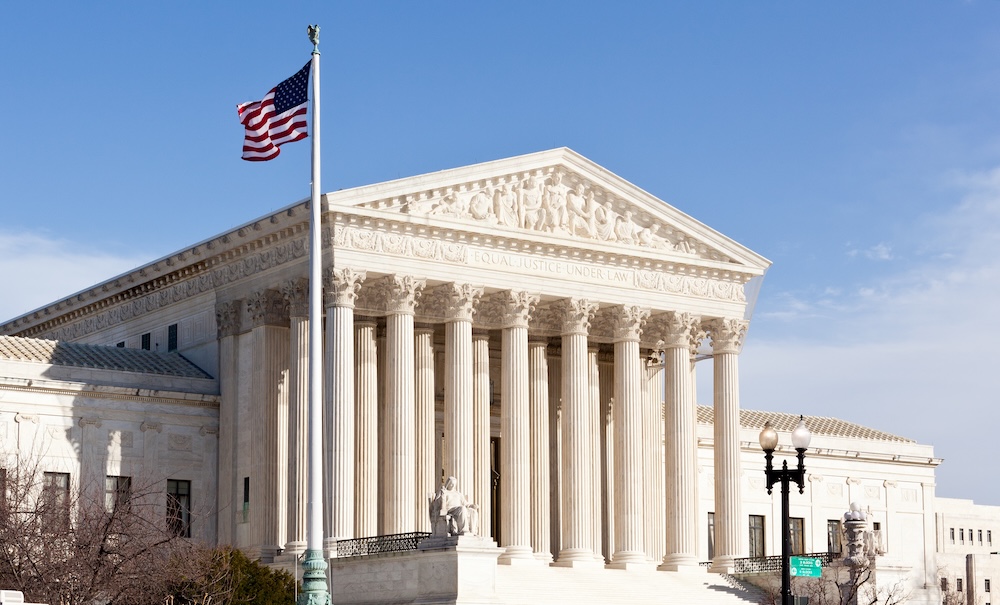
The Supreme Court Just Struck Down Trump’s Tariffs — Here’s What It Actually Means for Your Manufacturing Strategy
February 23, 2026 | Updated this morning with the latest CBP guidance
Chief Justice John Roberts, was clear: “IEEPA does not authorize the President to impose tariffs.”
If you’ve been managing a sourcing strategy, evaluating manufacturing partners, or trying to forecast total landed costs over the past year, you’ve been doing so inside a fog of uncertainty. This ruling doesn’t clear that fog entirely — but it changes the shape of it in ways every operations and supply chain leader needs to understand.
February 23, Tariff Update: The Tariff Switch Flips at Midnight Tonight
As of this morning, U.S. Customs and Border Protection (CBP) confirmed:
- All IEEPA tariffs stop at 12:01 a.m. EST, February 24
- A new 15% global tariff under Section 122 takes effect at the exact same moment
CBP is deactivating IEEPA tariff codes in the ACE system.
In a notice sent through its Cargo Systems Messaging Service (CSMS), CBP told shippers it will deactivate all HTSUS tariff codes associated with IEEPA-based orders in the Automated Commercial Environment (ACE) system. The agency gave no explanation for the three-day delay between the Supreme Court ruling (Friday) and the actual halt in collections — meaning importers were still being charged now-illegal tariffs through the weekend and into Monday.
Will Importers and Businesses Get Refunded Tariffs Already Paid?
No one knows. Economists estimate up to $175 billion in IEEPA duties could be eligible for refunds — roughly $500M per day had been collected.
However...
- The administration has made clear it is in no rush.
- Trump and Treasury Secretary Bessent have said the refund question belongs to lower courts, not the executive branch.
- CBP provided zero guidance on reimbursement.
- No administrative refund process has been announced.
For importers, the immediate priority is documentation.
Whether refunds come through administrative protest, Treasury action, or new court proceedings, having a clean audit trail will be essential.
If you paid IEEPA tariffs in 2025 or early 2026, start preserving documentation immediately:
- Entry summaries
- Proof of payment
- ACE portal records
- Whether refunds come via protest, litigation, or Treasury action, clean records will matter.
- Trade counsel should be on your radar.
What the Supreme Court Actually Decided on Tariffs Friday February 20, 2026
On February 20, 2026, the Court ruled 6–3 that:
IEEPA does not authorize the President to impose sweeping tariffs.
That invalidates:
- “Reciprocal” Liberation Day 2025 tariffs
- Fentanyl and immigration-related IEEPA duties
The ruling centered on the International Emergency Economic Powers Act (IEEPA), a 1977 law the Trump administration used as the legal foundation for sweeping, unilateral tariffs on nearly all U.S. trading partners. The court found that IEEPA simply doesn’t authorize tariff-setting power, full stop. As Roberts wrote, when Congress grants tariff authority, “it does so clearly and with careful constraints. It did neither here.”
The decision resolved two companion cases — *Learning Resources, Inc. v. Trump* and *Trump v. V.O.S. Selections* — effectively vacating the IEEPA tariff regime that had generated over $130 billion in revenue since 2025.
The ruling was a 6-3 split that crossed typical ideological lines. Justices Gorsuch and Barrett, both Trump appointees, joined the majority. Justices Thomas, Alito, and Kavanaugh dissented, with Kavanaugh flagging the messy question of how — or whether — the government would refund billions already collected from importers.
The IEEPA Tariff Replacement: 15% Section 122 Tariff
The administration didn’t accept the decision quietly. Within hours, Trump announced a new 10% global tariff under Section 122 of the Trade Act of 1974 — a separate legal authority the court did *not* rule on. By Saturday, he bumped the rate to 15%, effective February 24.
It’s now:
- 15% global
- Effective February 24
- Valid for 150 days (through July 24, unless Congress extends)
Treasury Secretary Scott Bessent signaled the administration’s broader playbook: replacing IEEPA tariffs by aggressively leveraging Section 232 (national security) and Section 301 (unfair trade practices) authorities — both of which have survived thousands of legal challenges and remain fully intact. Bessent projected the replacement regime would deliver “virtually unchanged tariff revenue in 2026.”
The bottom line for businesses: the headline tariff environment has shifted, but it has not gone away.
What’s Still in Place (And What Just Changed) with Tariffs
Still Standing:
- Section 232 steel (50%) and aluminum tariffs
- Section 301 tariffs on Chinese goods
- Country-specific auto tariffs
- Suspension of de minimis treatment
New:
- 15% global tariff under Section 122 (150-day limit)
Exemptions Under Section 122:
- USMCA-qualifying goods (Canada & Mexico)
- Goods already under Section 232 (no stacking)
- Certain ag products, pharma, electronics, aerospace
- In-transit goods (loaded before Feb 24, entered before Feb 28)
Invalidated (as of Feb. 24):
- All IEEPA-based tariffs
All IEEPA-based “reciprocal” tariffs — the country-specific rates from Liberation Day 2025. IEEPA-based fentanyl and immigration-related duties on Canada and Mexico.
Still uncertain:
- Whether and how importers will receive refunds on up to $175B in IEEPA tariffs already paid — the administration has punted this to lower courts.
- The durability of the Section 122 tariff after its 150-day ceiling (July 24) if Congress doesn’t act.
- How bilateral trade deals negotiated under IEEPA (South Korea, EU, India) will be renegotiated
Yale’s Budget Lab estimates that remaining tariffs will increase the overall U.S. price level by about 0.6%, with metals, electronics, and vehicles bearing the heaviest burden. The long-run hit to GDP is estimated at roughly 0.1%, or about $30 billion annually — significantly less than if the IEEPA tariffs had been upheld.
What This Means If You’re Sourcing from Overseas
- 15% is still significant.
- Section 232 and 301 remain.
- The 150-day clock introduces more uncertainty by mid-summer.
- Bilateral trade deals negotiated under IEEPA are now murky.
For businesses that had adjusted their manufacturing and sourcing strategies around the IEEPA tariff regime, this moment calls for a recalibration.
The tariff environment is lower, but not low. A 15% global tariff is still a meaningful cost. Combined with intact Section 232 and Section 301 levies, sourcing from China, Europe, and several other regions remains expensive relative to pre-2025 baselines.
Uncertainty is the new normal. The 150-day limit on Section 122 means the administration will need to either get Congressional authorization or find another legal hook by mid-summer. More litigation is almost certain. Building sourcing models that are sensitive to tariff rate changes — rather than dependent on a single assumed rate — is now a basic operational necessity.
Trade deal status is murky. Countries like South Korea had negotiated bilateral arrangements partly under the IEEPA framework. Those deals are now under review. If you had pricing assumptions tied to any of these negotiated rates, revisit them now.
The Bigger Picture: A Structural Shift in Trade Policy Power
Beyond the immediate business implications, this ruling is a landmark moment for the balance of power in U.S. trade policy. For the first time, the Supreme Court directly confronted the scope of unilateral presidential tariff authority and said: there are limits.
The major questions doctrine — requiring “clear congressional authorization” for sweeping executive action on significant issues — was invoked by Justices Gorsuch and Barrett in a plurality section of the opinion. That signals that future attempts to use broad emergency statutes to reshape global trade will face serious judicial headwinds.
Congress, which has largely delegated trade authority to the executive branch for decades, is now back in the conversation — whether it wants to be or not. The administration’s use of Section 122 already sets up a potential collision with Congressional authority, since that statute’s 150-day limit exists precisely to require legislative involvement.
What Businesses Should Do in the Next 30 Days Regarding Tariffs
If you’re evaluating your manufacturing footprint or supply chain partnerships, here’s a practical checklist for the next 30 days:
- Audit your IEEPA exposure immediately
Pull every relevant entry from ACE and preserve documentation. - Model against a 15% baseline starting Feb 24
Check exemption eligibility — especially USMCA. - Don’t assume fast refunds
Preserve legal position early. - Review trade deal dependencies
South Korea, EU, India arrangements may shift. - Re-evaluate nearshoring with fresh math
USMCA exemption materially changes landed cost comparisons.
Mexico and Canada now sit in a structurally different cost position than Asia or Europe.
Want to see how the current tariff environment affects your total landed costs? Download our costing calculator →