How To Create A Tech Pack for Your Product: A DIY Guide
A well-crafted tech pack is the difference between a seamless production run and a costly manufacturing nightmare.
In the world of product development, clarity is your most valuable currency. A professional tech pack acts as a universal language, ensuring your vision is translated perfectly from the first sketch to the final finished product.
For any product-based brand, the journey from a brilliant idea to a tangible item is filled with intricate steps. But there’s one document that serves as the ultimate blueprint, ensuring everyone from designers to manufacturers is on the same page: the Tech Pack.
Think of a tech pack as your product's comprehensive instruction manual. It's the essential document that communicates every detail of your design to manufacturers, helping them understand exactly what to produce, how to produce it, and to what standards. Without a clear tech pack, you're opening the door to miscommunication, costly errors, and significant delays.
While large brands often have dedicated teams for this, if you're a product-based brand starting out, creating a DIY tech pack is an incredibly valuable skill. It saves money, clarifies your vision, and empowers you to manage your production with confidence.
What is a Tech Pack, and Why Do You Need One?
A tech pack (technical package) is a detailed document containing all the specifications needed to manufacture a product. This includes everything from measurements and materials to colors, branding, and construction details.
Why is it crucial?
- Clarity: Eliminates guesswork for your manufacturer.
- Accuracy: Ensures your final product matches your vision.
- Cost Savings: Reduces errors, rework, and wasted materials.
- Efficiency: Streamlines the sampling and production process.
- Quality Control: Provides a standard for inspecting finished goods.
The Essential Components of a DIY Tech Pack
A good tech pack is thorough but concise. Here are the key sections you'll need to include:
1. Cover Page / Product Overview
Start with a summary of your product:
- Product Name & Style Number: A unique identifier.
- Date: Creation and revision dates.
- Brand Name & Contact Info: Your company details.
- Brief Product Description: A concise overview.
- Main Image: A clear, representative sketch of the final product.
2. Bill of Materials (BOM)
This is a comprehensive list of every component required. Be incredibly detailed:
- Fabric/Material: Type, composition, weight, and color codes (e.g., Pantone).
- Trims: Zippers, buttons, labels, thread type, and elastic.
- Supplier Information: Specific sources for your chosen materials.
3. Construction Details & Stitching
Explain how your product is put together using annotated sketches:
- Assembly Instructions: Step-by-step connection points.
- Stitch Types: Specify names (e.g., overlock, flatlock) and stitches per inch (SPI).
- Seam Finishes: How seams should be closed (e.g., serged or clean finish).
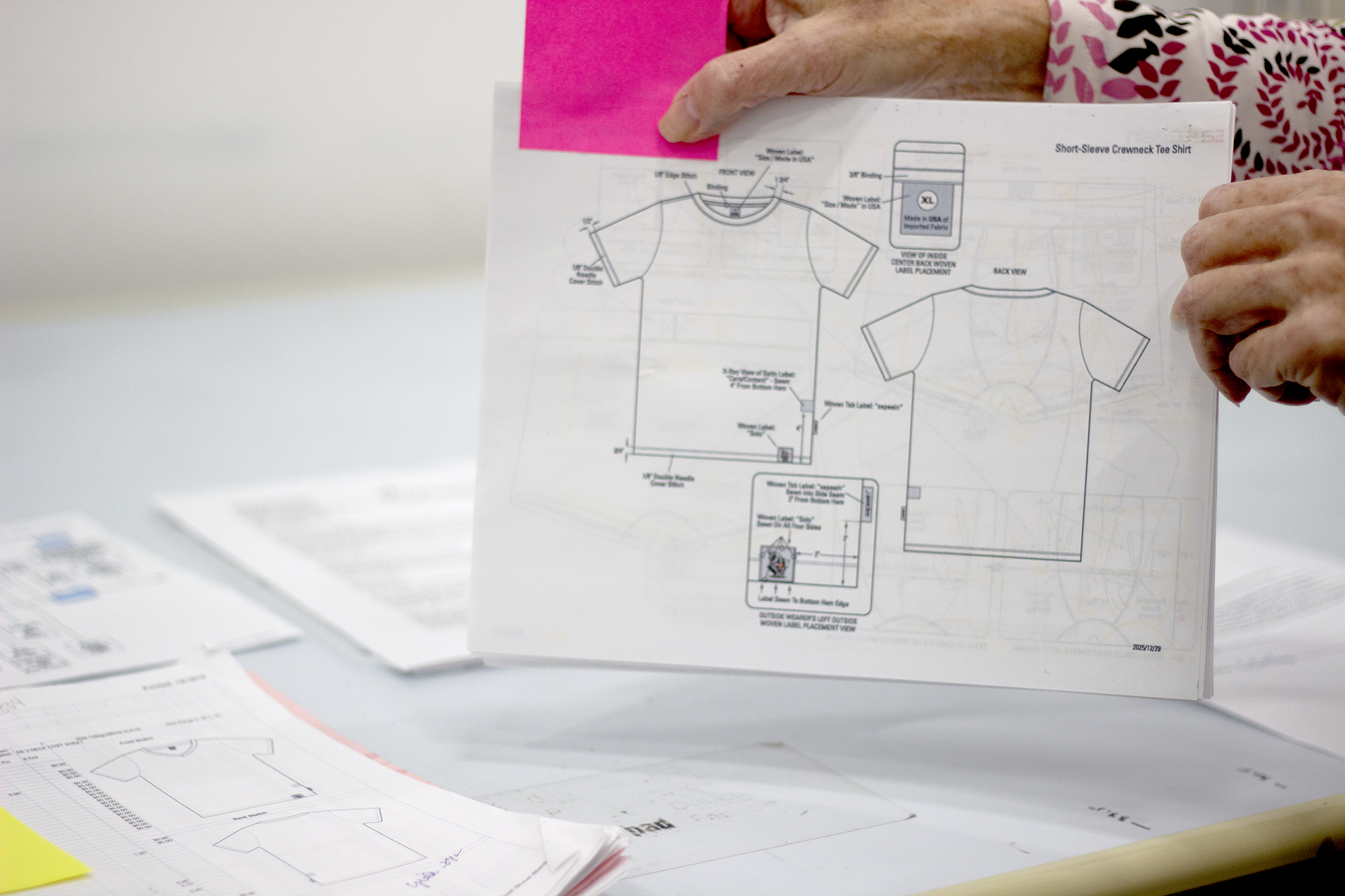
4. Detailed Sketches (Technical Flats)
These are the most critical visual elements. Use clear, black and white line drawings:
- Front, Back, and Side Views: Show all angles.
- Close-ups: Illustrate specific features like pockets, closures, or pleats.
- Annotations: Use callouts to highlight specific construction elements.
5. Graded Measurements (Spec Sheet)
This is the exact blueprint of your product's dimensions:
- Point of Measure (POMs): A list of every measurement point.
- Graded Specs: Measurements for all planned sizes (S, M, L, XL).
- Tolerance: Specify the acceptable variation (e.g., +/- 0.5 inches).
6. Colorways & Labeling
Show all variations and the finishing touches:
- Colorways: Digital swatches with Pantone codes for every version.
- Labeling: Design and placement for main labels, care labels, and hangtags.
- Packaging: Polybag specs and carton marking instructions.
Pro Tips for Success
- Be Overly Detailed: Ambiguity is the enemy of quality.
- Use Professional Tools: While Google Sheets works, tools like Adobe Illustrator or Inkscape help create professional "flats."
- Update Regularly: Tech packs are living documents that should be updated after every sample round.
Ready to Bring Your Product to Life?
Creating a DIY tech pack is an empowering step, but it can be time-consuming and complex to get exactly right. If you want to bypass the learning curve and ensure your specifications are manufacturer-ready from day one, we can help.
Create an account and find tech pack designers now