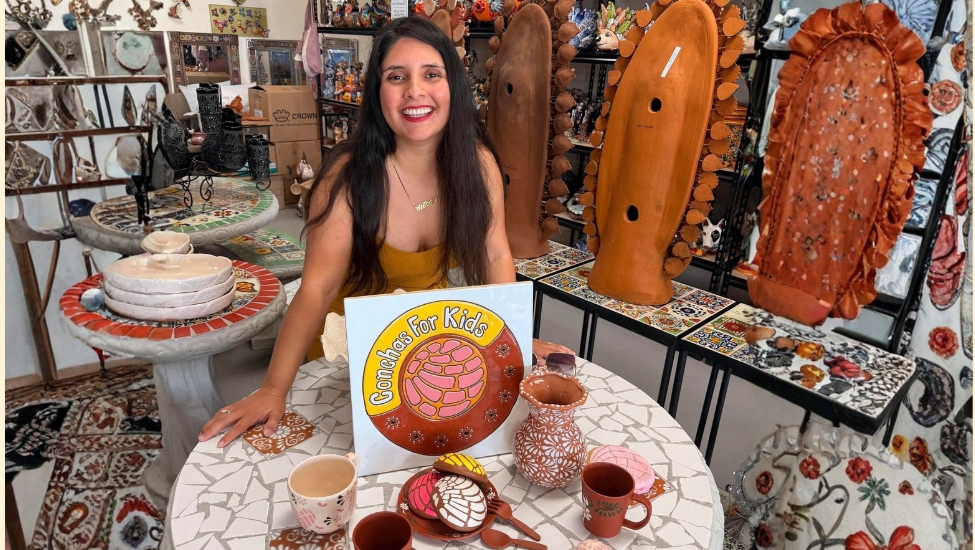
Brand Spotlight: How Conchas for Kids Turned a Childhood Memory Into a $32K Kickstarter
Inspired by trips to the panadería with her abuelito, Estrella created a toy celebrating Latino culture. Here's how she found a manufacturing partner, built in public, and rallied 456 backers to bring Conchas for Kids to life.
Beyond raising the money to manufacture the first run, the campaign gave Estrella something else: evidence that people wanted this product to exist.
A childhood memory, a community of 100K, and a toy play set that raised $32,516 on Kickstarter. This is how Estrella took Conchas for Kids from idea to factory to fully funded, and brought her community along the whole way.
Preserving culture through play
There’s a particular kind of magic in seeing a piece of your childhood reflected back to you.
Conchas for Kids grew out of Estrella's own childhood, and a desire to give the next generation a way to see their culture reflected in play.
Growing up Mexican American in the United States, she spent weekends with her abuelito picking out conchas at their local panadería. Those trips were about more than bread. They were time together, filled with stories, life lessons, and reminders that her culture was something to be proud of.
Years later, when Estrella became a tía, she found herself searching for Mexican-inspired toys to give to her baby nephew. She looked through store after store and struggled to find products that reflected the culture she grew up with.
She knew the feeling of growing up between two cultures. She also knew what it meant to look for pieces of yourself in the world around you and not always find them.
What if a child could play with a tiny concha, recognize something familiar from their own family, and feel that same sense of connection?
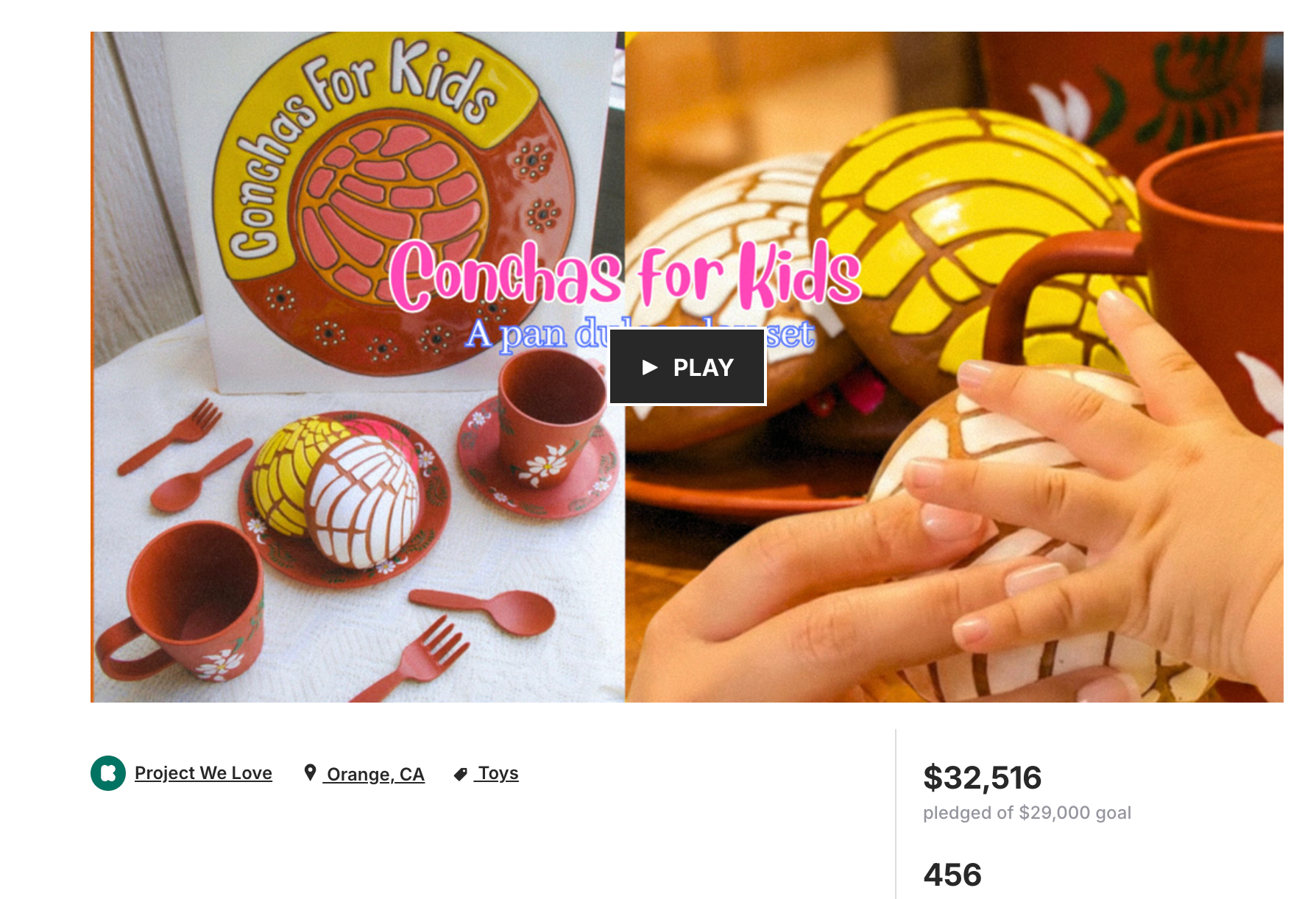
That question became Conchas for Kids, a pan dulce-inspired play set designed to help Latino children see their culture reflected in imaginative play.
I'd followed Estrella's work since my time in financial education, so when I first saw her share the Conchas for Kids concept, it immediately caught my attention. I loved the idea, and it was exciting to watch her start bringing it to life.
Before the toy, there was a community
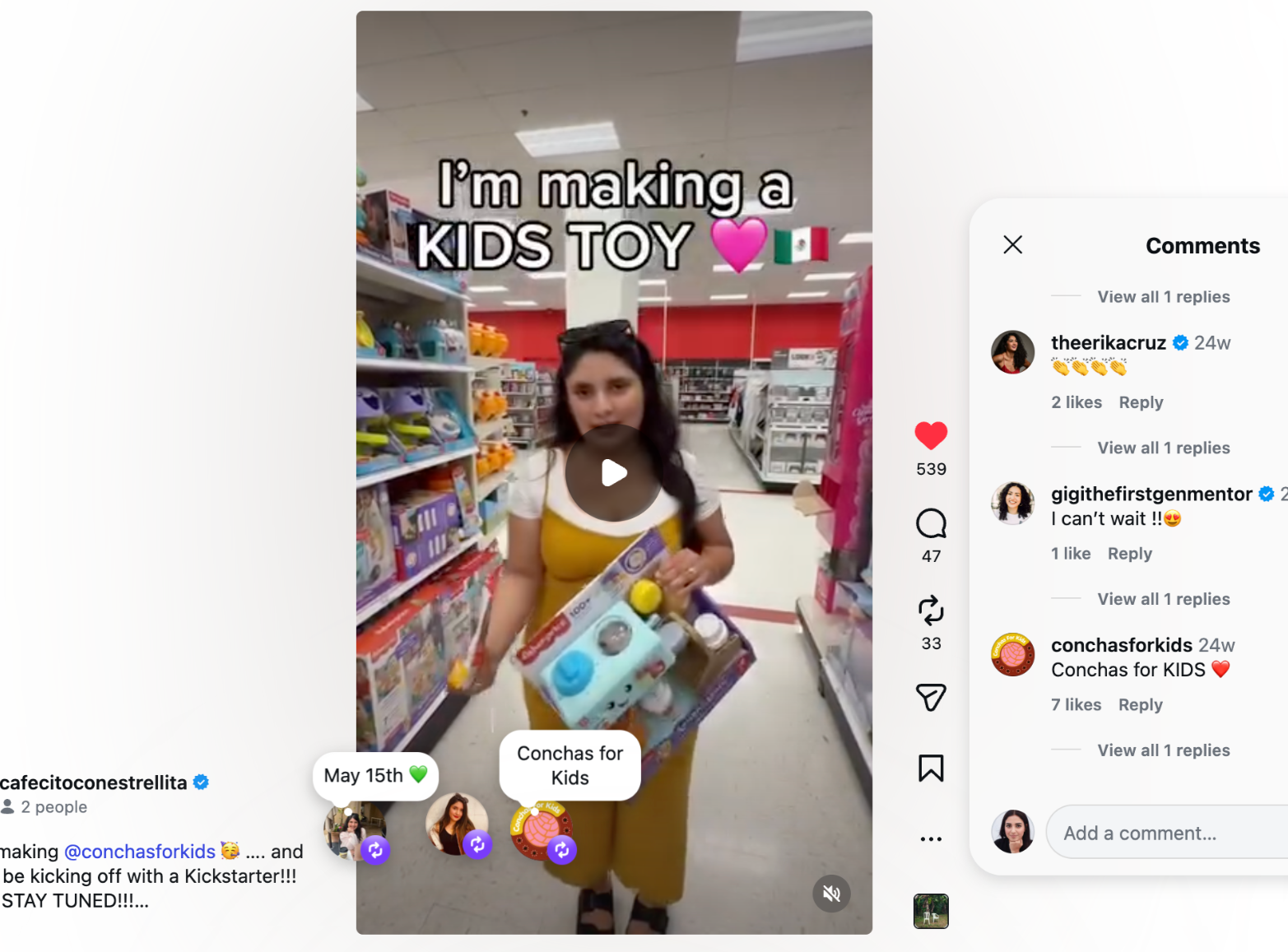
In 2020, Estrella started Cafecito con Estrellita, a bilingual digital community for first-generation Latinas navigating higher education, careers, and personal growth.
Over the years, it grew to more than 100,000 people.
She shared her own experiences and created space for others to talk about theirs. Her work eventually took her to Harvard University, a TEDx stage, and a PBS documentary with Roadtrip Nation.
What began as a platform to support first-generation Latinas became something much larger: a community of people who had grown alongside her.
And then Estrella began to grow in a new direction, too.
The people who had first found her as college students were now graduating, building careers, becoming mothers and aunts. Estrella was entering a new stage of life herself. The questions she was asking were changing, and so were the things she wanted to create.
Conchas for Kids brought those worlds together. It was a product inspired by her own childhood, made for a generation of children who deserved to see their culture celebrated from the beginning.
The idea felt personal. Turning it into a business was another matter entirely.
Building a product in public
Making a physical product is a different kind of undertaking than building an online community.
An idea has to become a design. The design has to become a prototype. Then come manufacturing quotes, materials, production costs, safety requirements, packaging, and the many decisions that determine whether a product can actually be made.
For a first-time toy founder, much of this was new territory.
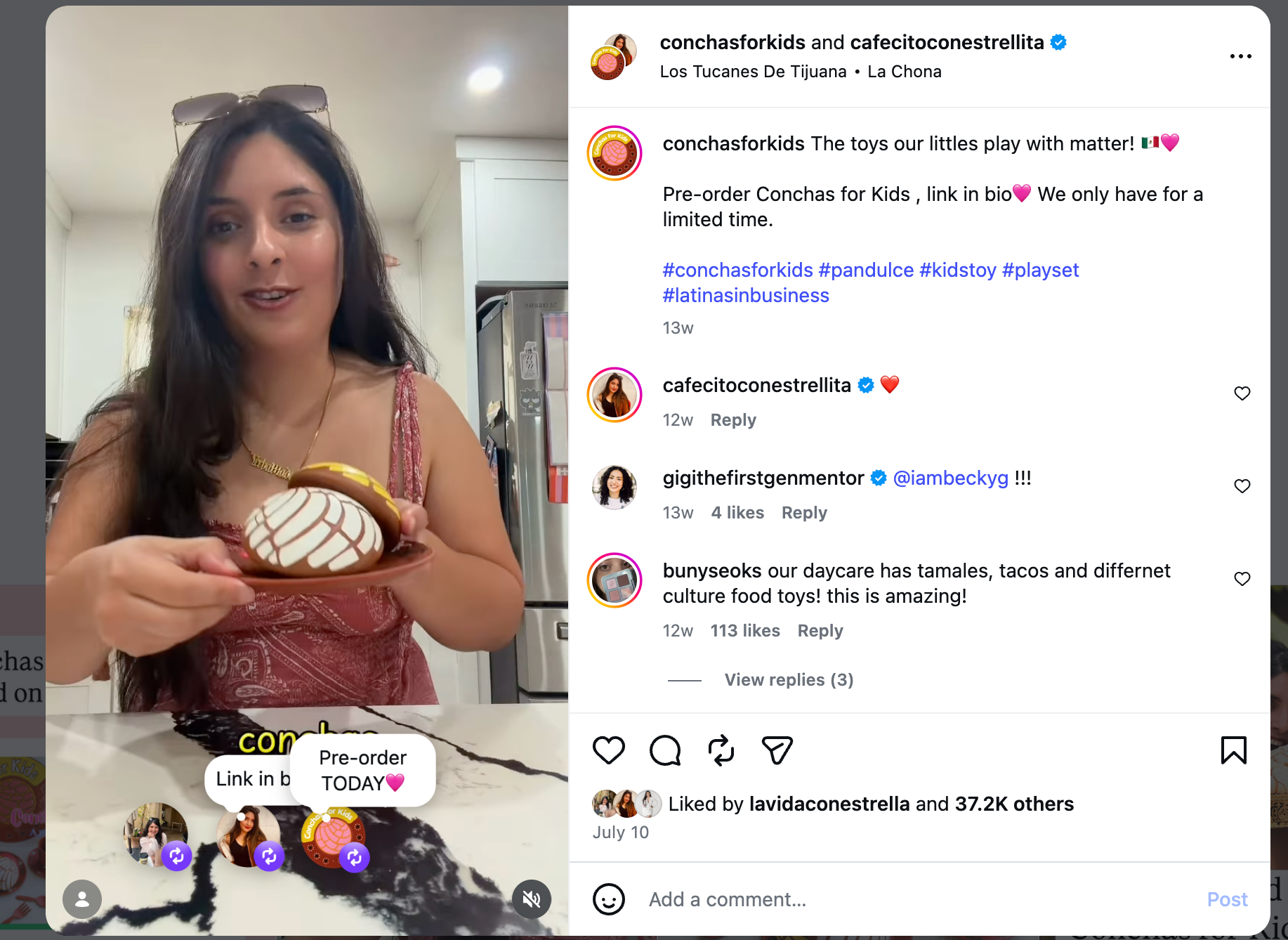
Estrella documented that learning curve as it happened. She talked about the costs, the manufacturing process, and the details that people don't necessarily see when they encounter a finished product on a shelf.
The transparency served a purpose beyond creating content. It gave people a chance to understand what she was building, why it mattered, and what it would take to bring it into the world.
It also made the audience part of the story before there was a finished product to buy.
That distinction became especially important when it was time to raise the money to manufacture the first run.
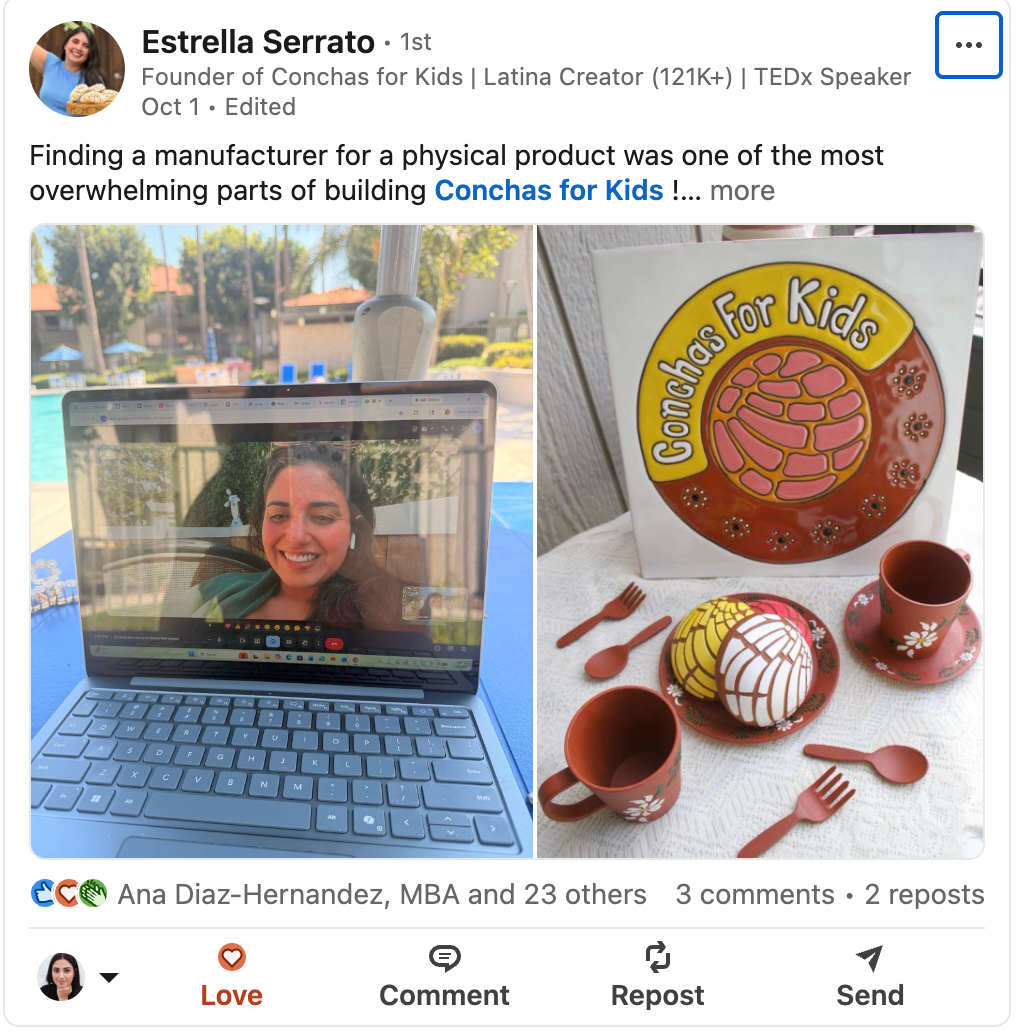
When Estrella was ready to move toward production, she reached out to our team at Nearshore for help finding a factory. We talked through her materials, design specifications, and manufacturing requirements, then narrowed the options to a few suppliers that fit her needs. After several video calls to review the options, she chose a California-based supplier.
Finding the right manufacturing partner is one of the less visible parts of launching a physical product, but it's a critical step between having an idea and making something people can actually buy.
Asking people to believe in something that doesn't exist yet
In July 2026, Estrella launched a Kickstarter campaign for Conchas for Kids.
Crowdfunding is a particular challenge for physical-product founders. You're asking people to place an order for something that hasn't been manufactured yet. You have to communicate the vision, explain the timeline, establish trust, and convince people that the idea is worth backing before they can hold the finished product in their hands.
For Estrella, there was another learning curve: teaching her audience how Kickstarter worked and why the campaign needed their support.
She had no venture capital backing the project. Instead, she leaned on the resources she had built: her storytelling, her audience, and the relationships that had developed over years of showing up consistently.
The campaign raised $32,516 from 456 backers, surpassing its $29,000 goal. Estrella also shared that her content reached 4.6 million organic views across platforms during the launch period.
Those numbers are impressive. But what I find most interesting is what they represent.
Hundreds of people were willing to support a product before it existed because they understood the story behind it. They weren't simply buying a play set. They were supporting the idea that Latino children should have toys that reflect their culture, family traditions, and experiences.
Beyond raising the money to manufacture the first run, the campaign gave Estrella something else: evidence that people wanted this product to exist.
Representation and storytelling in toy products
It's easy to talk about representation in terms of what we see in the media, in advertising, or in the people leading companies. A toy can also be one of the first ways a child learns what belongs in their world.
A concha play set may remind a child of a weekend trip to the panadería, a grandparent who brought home a bag of pan dulce, or a family gathering where everyone had their favorite. It can give parents and grandparents a way to share traditions through play.
And for children who don't grow up with those experiences, it can offer a way to discover them.
That is what makes Conchas for Kids more than a clever product concept. It takes something deeply familiar to many Latino families and gives it a place in a category where those everyday cultural details have often been overlooked.
This is just the beginning
Watching Estrella build this business has reminded me how rarely a new venture begins entirely from scratch.
We tend to tell founder stories as if there's a clean break between one thing and the next: the old career, the new idea, the big launch. But sometimes the most valuable thing a founder brings to a new business is everything they have already built. The relationships, trust, lessons and community.
Estrella had spent years building a community around education, identity, and personal growth. She could have treated her toy company as an entirely separate undertaking. Instead, she found a way to let that community evolve with her.
That required more than a marketing strategy. It required being willing to change how she saw her own work.
I think that's one of the less-discussed parts of building a business: knowing when to start something new, and when to recognize that what you've already built can take you somewhere you didn't expect.
Conchas for Kids is still at the beginning of its journey, with production in motion. But the idea has already traveled a long way, from memories of a panadería in childhood to a community of hundreds of people who helped fund its first manufacturing run.
Follow Estrellita at @cafecitoconestrellita and @conchasforkids on Instagram and TikTok.
Further reading on Estrella’s story:
- How crowdfunding is helping Latina founders
- Estrella on the Cultura Cash podcast
- These Latina Founders Built On Social Media. Here’s What Unlocks Scale
This is the first edition of Brand Spotlight, a series about the people, ideas, and experiences behind emerging brands. I'm interested in the parts of building a business we don't always see: where an idea comes from, what it takes to bring it to life, and the decisions that shape what happens next.